Ecoworld
https://www.ecoworldrecycling.co.ke
A Crisis That Could Not Be Ignored
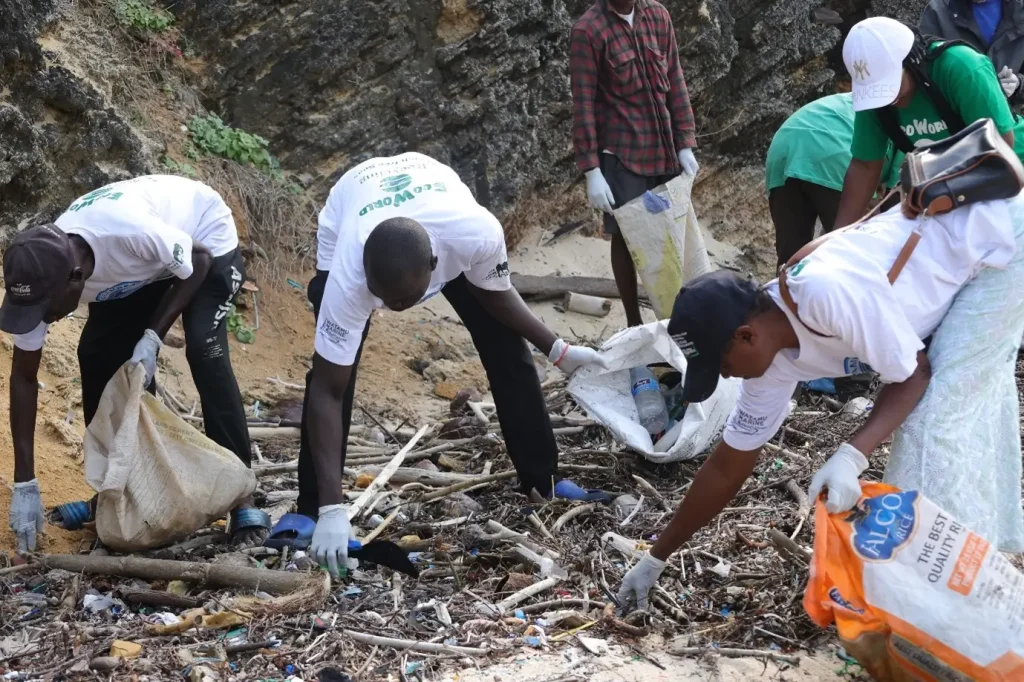
Kadzo grew up beside the Indian Ocean. As a mother of four in Kilifi County, the sea was never just a backdrop, it was a pantry, a source of pride, and the backbone of the local economy. But something had changed. The white beaches that once drew fishermen, divers, explorers, and sun-seekers were increasingly being lost beneath a tide of plastic waste. Bags. Bottles. Discarded fishing gear. The debris piling up on shore told a story about a global crisis arriving at a very local doorstep.
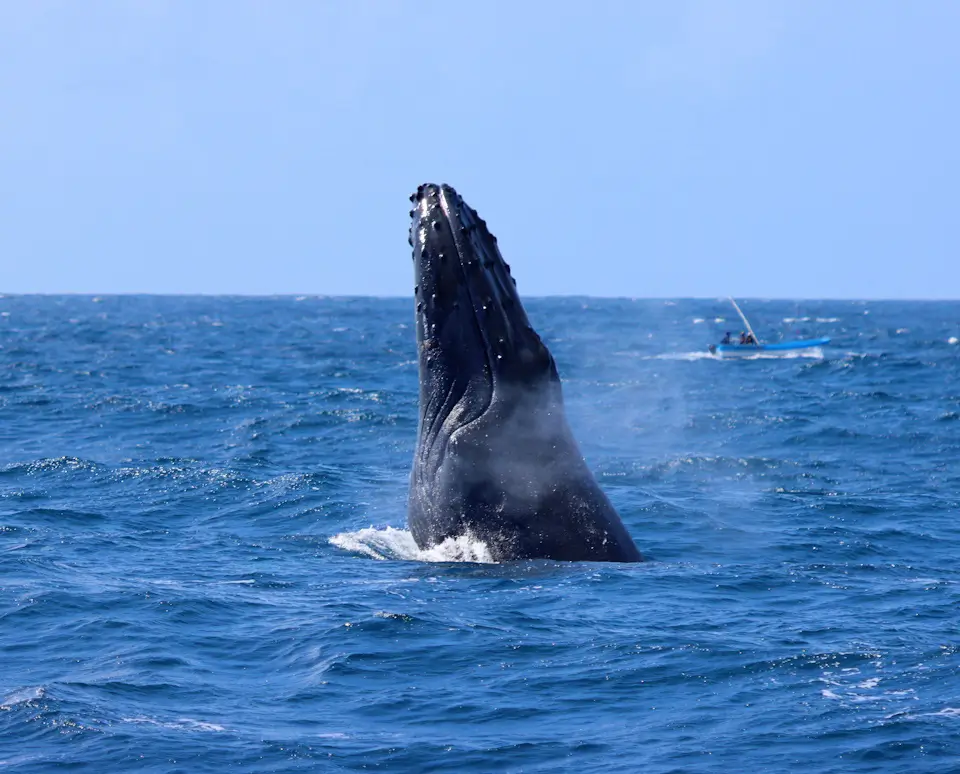
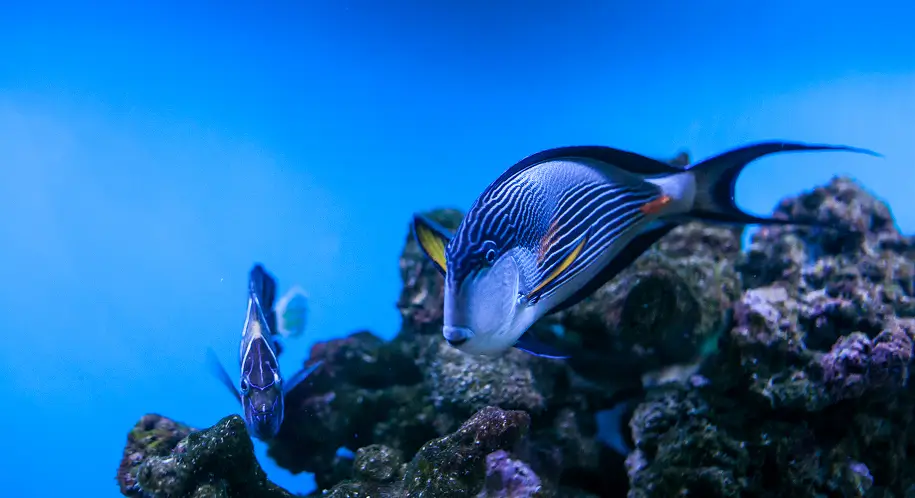
Watamu sits within Kenya’s first Marine National Park and Reserve, one of the oldest protected marine areas on the African continent. Its coral reefs support an extraordinary diversity of life, and its beaches are critical nesting grounds for endangered sea turtles. Yet researchers at the Kenya Marine and Fisheries Research Institute (KEMFRI) have found that plastics make up 58 percent of all marine litter washing ashore. Those same plastics are ingested by turtles who mistake bags for jellyfish, swallowed by dolphins and whale sharks, and smother the corals and seabed that coastal livelihoods depend upon.
By 2008, the situation in Watamu had reached a breaking point. An estimated 37 tonnes of plastic pollution were washing onto Kenya’s shores every year. Tourists were turning away. Fishermen and boat operators competed over dwindling reef and mangrove resources. The community came together: hotels, environmental groups, local business owners: and asked a simple but urgent question: what can we do, right here, right now?
Building a Circular Economy from the Ground Up
The answer that emerged was Ecoworld Recycling, established through a partnership with the Watamu Marine Association (WMA) in 2009 and formally operating as a recycling facility from 2012. Rather than waiting for distant policy solutions, Ecoworld built its model from the community outward. Women and youth groups, often the most economically marginalized members of coastal societies and within the solid waste management industry, were placed at the center of a plastic collection and processing chain that would generate both environmental and economic returns.
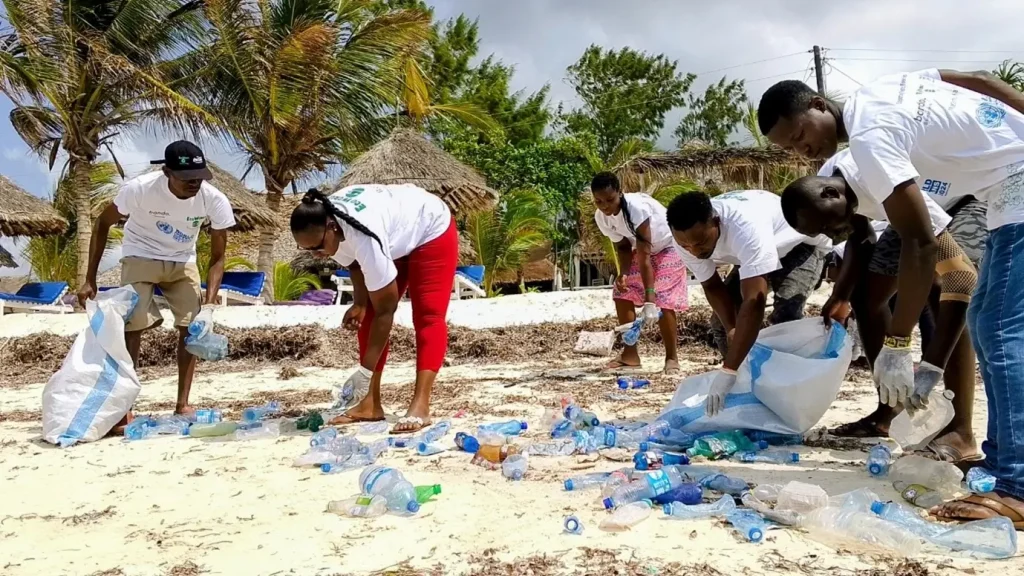
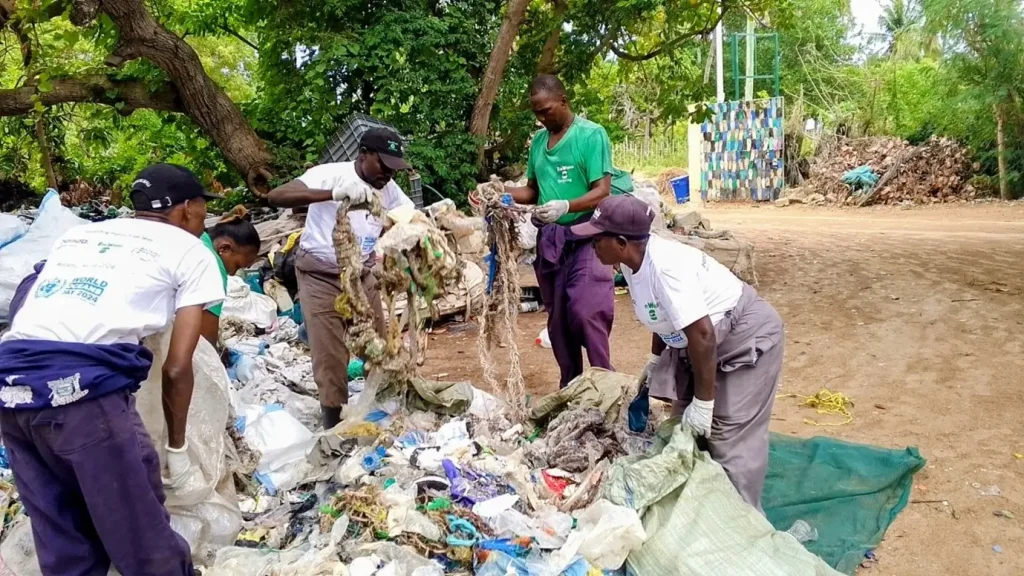
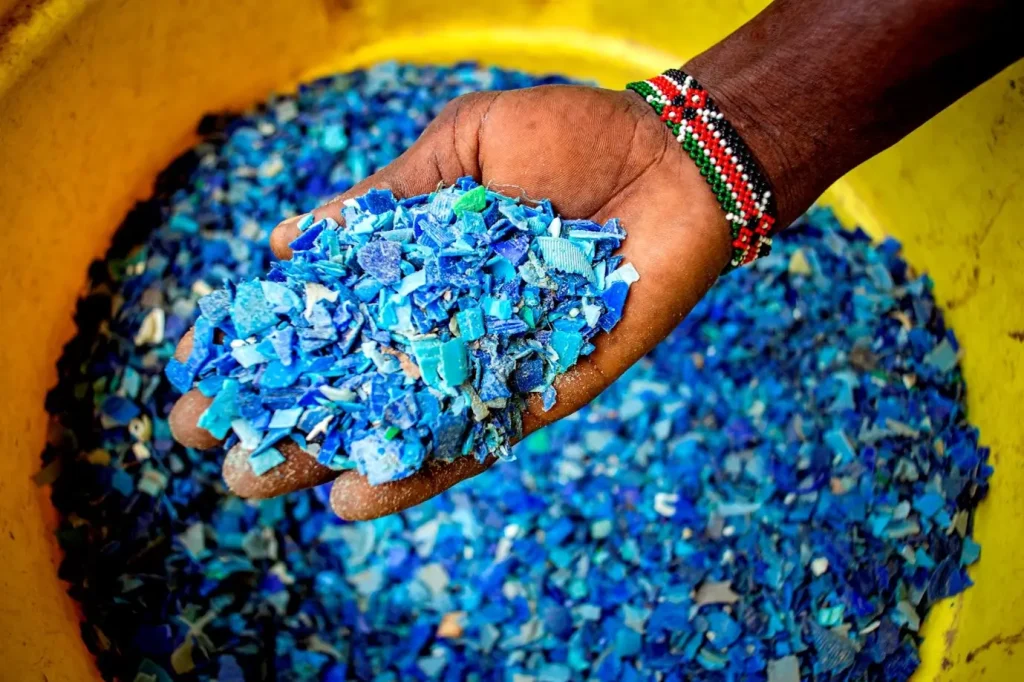
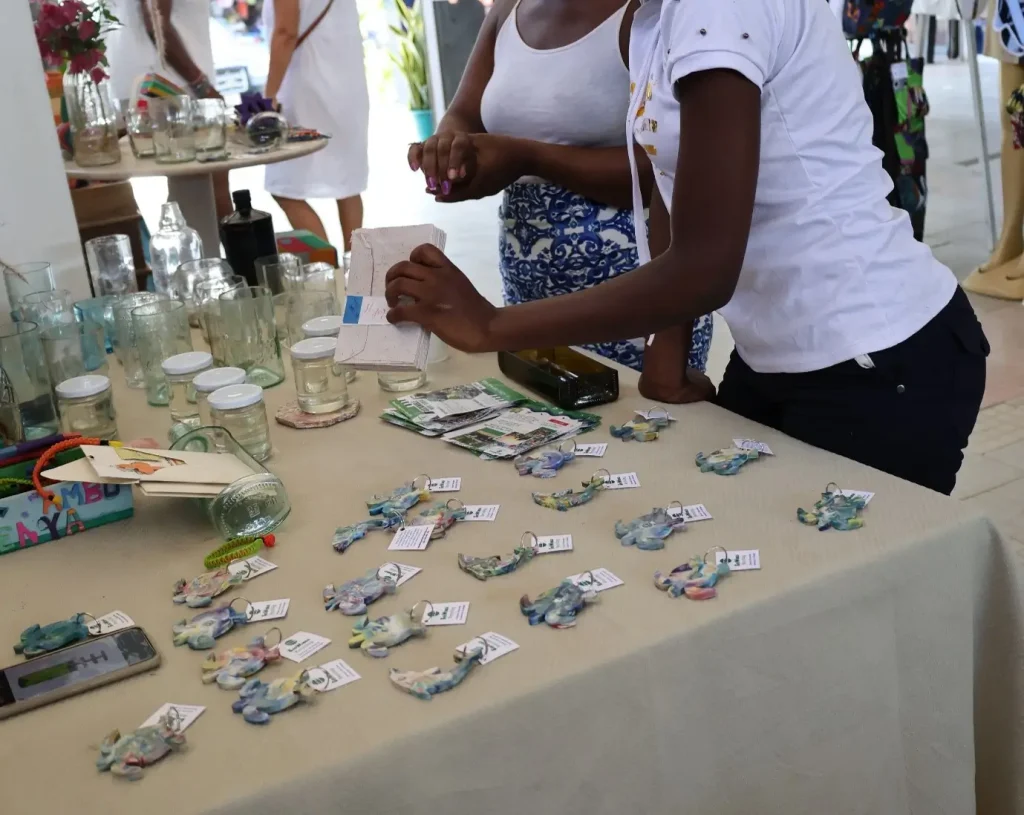
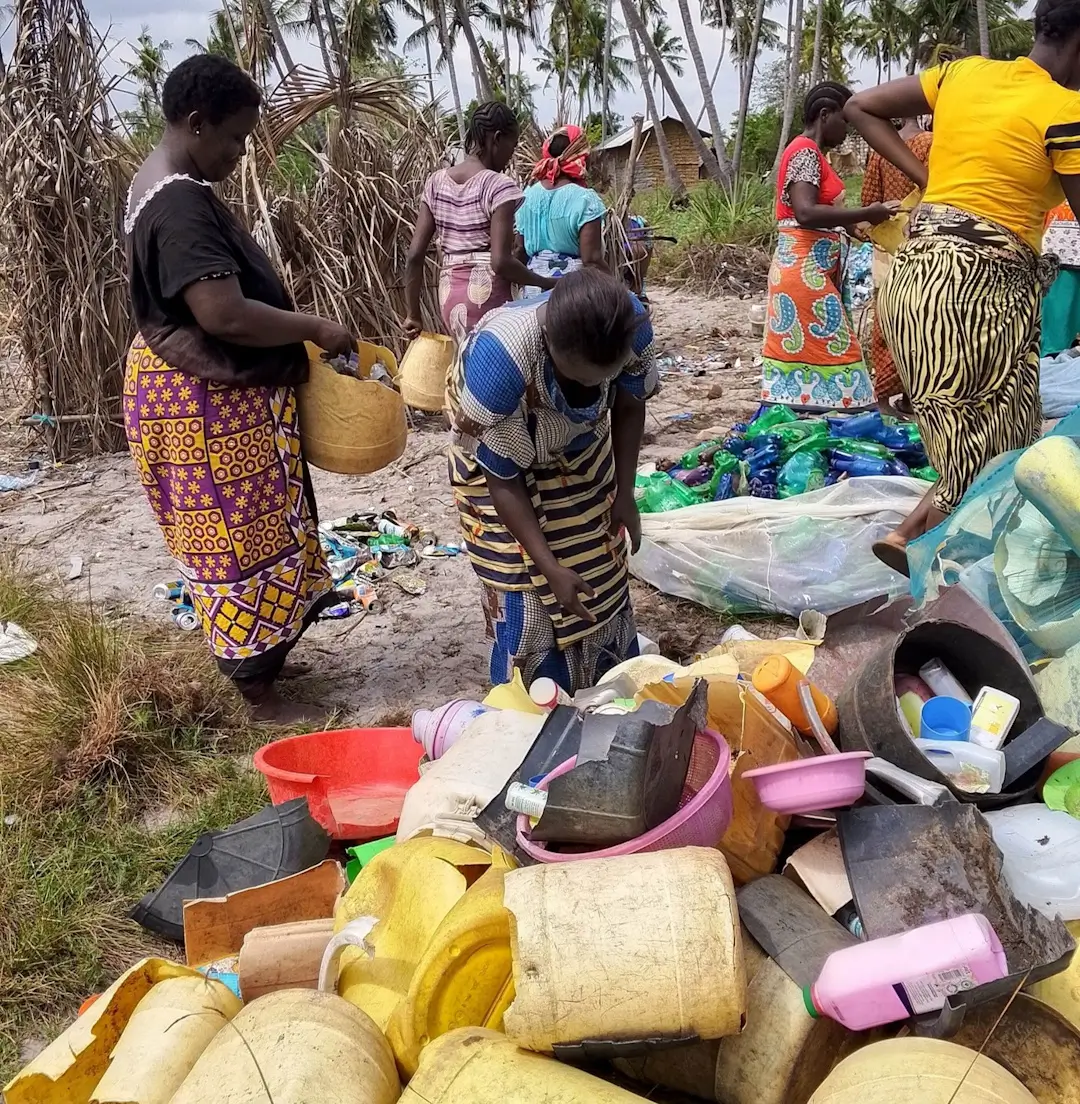
The mechanics are elegantly simple. Beach cleaners, many of them women like Kadzo and Imelda, collect plastic waste from the shoreline and call the Ecoworld team to collect. During collection, the waste is weighed, and every collector is instantly paid per every kilo of plastic waste collected. The waste is then ferried to the fully mechanized Material Recovery Facility in Watamu. There, the waste is sorted, crushed, and processed. The cleaned, machine-crushed plastic is then sold to recycling industries in Mombasa and Nairobi, while a portion is used to create upcycled products: key holders, coasters, fridge magnets, art pieces, and sculptures: that are sold through the in-house recycling shop, hotel boutiques, and tourist markets. The income flows back to collectors in the form of daily wages and buy-back payments, through what Ecoworld describes as a “Weigh and Pay” system: bring your plastic, earn your income per kg of plastic waste collected.
The buy-back scheme has proven particularly effective at changing community behavior. When plastic has monetary value, it is no longer rubbish, it is a resource. Collectors receive training on plastic types, waste sorting, and processing. Building skills that extend well beyond beach cleanup. Samson, a 20’s-year-old who joined Ecoworld’s training programme, now earns additional income crafting marketable goods from recycled material, a direct example of the skills-and-enterprise ladder the model is designed to create.
Scale, Impact, and a Multiplying Model
The numbers speak to a programme that has grown steadily without losing its community roots. Ecoworld currently collects an average of twenty tonnes of plastic waste per month from Watamu and Kilifi-based women and youth groups. Its recycling center processes over 10 tonnes of plastic waste every month. Looking ahead, the organization has set ambitious targets for 2025: recycling 20 or more metric tonnes per month, recovering 40 tonnes of ocean plastic and litter, and establishing new Material Recovery Facility in Mombasa County.
Crucially, Ecoworld has designed its model for replicability. Its leadership has been explicit about the vision: if it works in Watamu, it can work in other coastal resort towns across Kenya, along the East African coastline, and in any developing country where a hotel industry, a plastic waste problem, and an underserved community intersect. The goal is not merely to solve Kilifi’s challenge, but to offer a tested template for the region and beyond.
Innovation is also driving the next phase of EcoWorld’s growth on two ambitious fronts. The first is materials research: Ecoworld has developed an interlocking block prototype made from hard-to-recycle plastics, including polypropylene that are typically the most difficult to divert from landfills and the ocean. The prototype is construction-ready and awaits funder support for testing and production at scale, with the potential to permanently lock problem plastics into durable, affordable building materials for coastal communities.
The second front is the Circular Economy Hub, the first facility of its kind dedicated specifically to creating livelihood pathways for local communities within the solid waste circular economy. More than a training center, the Hub is designed as a live, working ecosystem where women, youth, and entrepreneurs can understand the value of waste, learn how to earn from it, and develop enterprises within real, functioning material markets. Built directly on EcoWorld’s existing Material Recovery Facility, community buyback network, and marine litter operations, the Hub will offer short courses, innovation and maker spaces, a community repair café, and a storytelling platform, making circular economy participation practical, income-generating, and genuinely accessible to those who need it most.
Protecting the Marine Park and the Livelihoods That Depend on It
Watamu’s Marine National Park and Reserve is not simply an ecological asset; it is the economic engine of the local community. The reefs, turtle nesting beaches, and clear waters attract thousands of domestic and international visitors every year, sustaining hotels, dive operators, fishing families, and artisans. When plastic debris encroaches on these assets, the damage is felt across the entire socio-economic fabric of the area.
EcoWorld’s work is therefore both conservation and economic resilience in action. Clean beaches maintain the area’s appeal for ecotourism. Healthy reefs support sustainable fisheries. The same waste that once threatened marine life now generates dignified employment. This interconnection, between pollution reduction, biodiversity protection, and community income, exemplifies the kind of integrated, evidence-based approach that marine protected area management increasingly demands.
The tourism sector has become a key partner rather than a passive beneficiary. Hotels sponsor community beach-cleaning teams and receive waste-management services in return. International conservation travel organizations have begun structuring their programmes to direct funding directly to EcoWorld’s beach cleaners, creating traceable, measurable support from international visitors to frontline environmental workers. This kind of direct value chain is rare, and its transparency is part of its power.
Art, Identity, and the Value of Waste
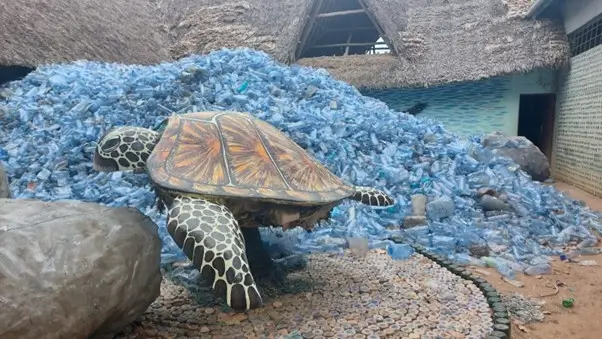
No single image captures the spirit of Ecoworld’s work quite like the life-sized Bottlenose Dolphin sculpture installed at the Watamu Recycling Centre crafted entirely from over 1,000 glass bottles by artist Andrew MacNaughton or the large turtle sculpture at the center of the MRF. They are both a celebration of the ocean and a statement about what can be made from what is discarded.
Upcycling has become a genuine strand of the Ecoworld economy, not merely a side project. Local artisans transform recovered plastic into bags, jewelry, accessories, and sculptures that are sold to tourists and green enterprises throughout the region. Ocean Sole, a Nairobi-based partner, takes discarded flip-flops and other marine flotsam and turns them into distinctive products that reach international markets. Each sale is a small but meaningful act of keeping material in the economy rather than in the sea.
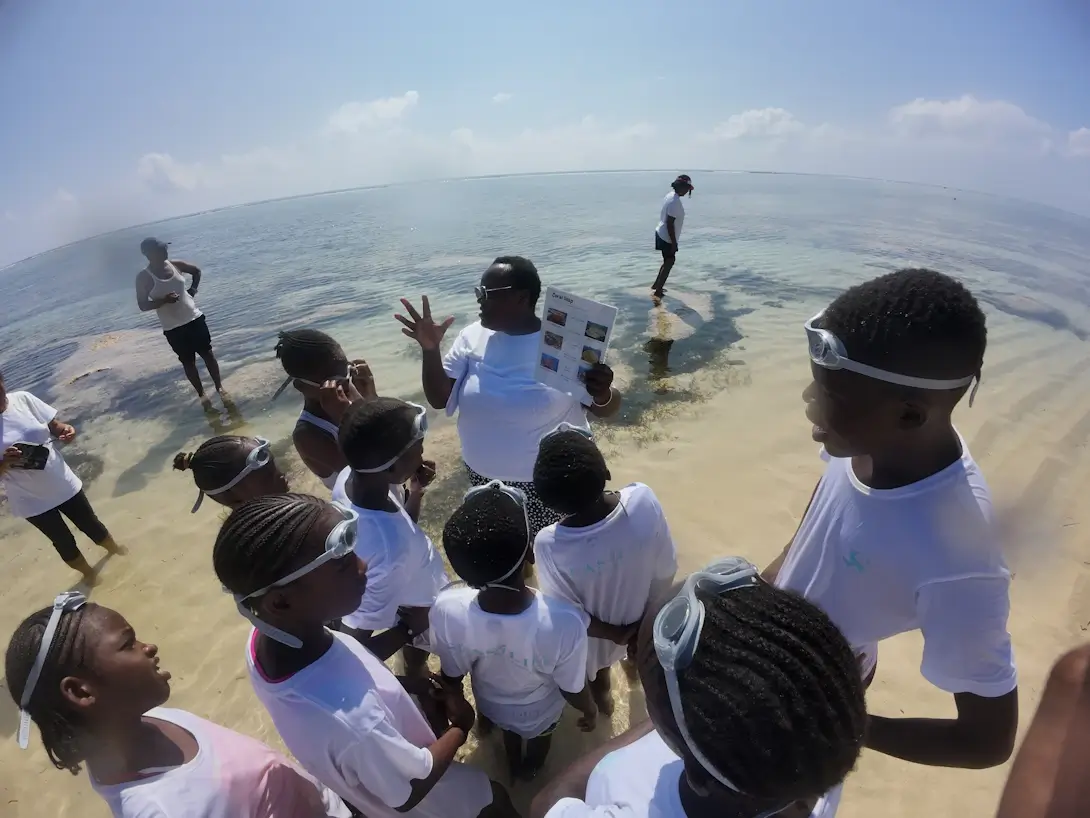
The Ecoworld Recycling Centre itself is open to the public as an educational attraction and demonstration site, inviting schools, government bodies, and institutions to observe and learn from a working circular economy in action. This commitment to knowledge-sharing reflects a wider ambition — not just to clean one stretch of coastline, but to demonstrate what is possible and inspire others to replicate it.
A Blueprint for the Blue Economy
As the Our Ocean Conference convenes in 2026, with the Western Indian Ocean and East Africa’s coastal ecosystems at the center of global sustainability dialogue, Ecoworld’s model carries a message that is both local and universal.
A sustainable blue economy cannot be built by governments and international agencies alone. It requires the women who walk beaches at dawn with collection bags. The youth who learn to crush plastic and craft it into something new. The hotels that sponsor cleaning teams instead of simply enjoying clean beaches. The scientists who measure what is working. The local associations that hold it all together.
Ecoworld has shown that these actors can be woven into a functioning system, one that generates income, reduces marine pollution, protects biodiversity, and builds community resilience simultaneously. With support from partners including IUCN, USAID, Sida, County governments and the Kenya Wildlife Service, and with ambitions to expand from Kilifi County into Mombasa and beyond, the model is proving it can scale without losing the community ownership that makes it work.
For Kadzo, the transformation is personal. What began as alarm at a vanishing coastline has become a livelihood, a community, and a source of purpose. The ocean that shaped her childhood is, gradually, being reclaimed not by distant intervention, but by the hands of the people who live beside it.
“Our goal is to reduce plastic pollution in our oceans and the threat it poses to marine life while providing livelihood pathways for the community in the plastics circular economy.”
Credit: Steve Trott – Ecoworld Watamu
ABOUT ECOWORLD RECYCLING
Ecoworld Recycling is a social enterprise based in Watamu, Kilifi County, Kenya, working to formalize and empower women and youth in solid waste management to drive the growth of the plastic’s circular economy along the Kenya coast. Founded in 2012 in partnership with the Watamu Marine Association, Ecoworld operates a plastic collection, processing, and upcycling facility serving the Indian Ocean coastline, creating sustainable livelihoods, and lasting environmental impact for coastal communities. Its vision is to ignite the growth of a plastic circular economy along the Kenyan coast through inclusive livelihood options, partnering with local communities, businesses, NGOs, county governments, and international organizations to make that vision real.
For more information, visit www.ecoworldrecycling.co.ke or contact info@ecoworldrecycling.co.ke. Or call/WhatsApp +254 795 943 545