Ocean Sole
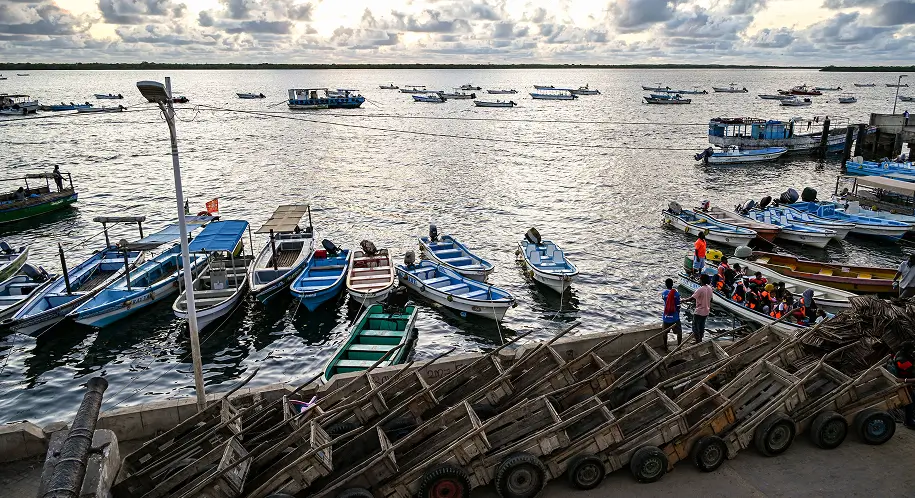
At sunrise along the coast of Kilifi, the sea tells its own story.
For generations, the Giriama fishers of Kwa Chambo have lived in rhythm with the ocean—reading tides, respecting seasons, and fishing with methods designed not to take too much. Their knowledge is built not only on experience, but on restraint.
“In the old days we never fished when the water was rough, the ocean had a break,” recalls an elder fisherman.
That “break” was more than a pause—it was a way of allowing the ocean to recover.
Today, that balance is under pressure.
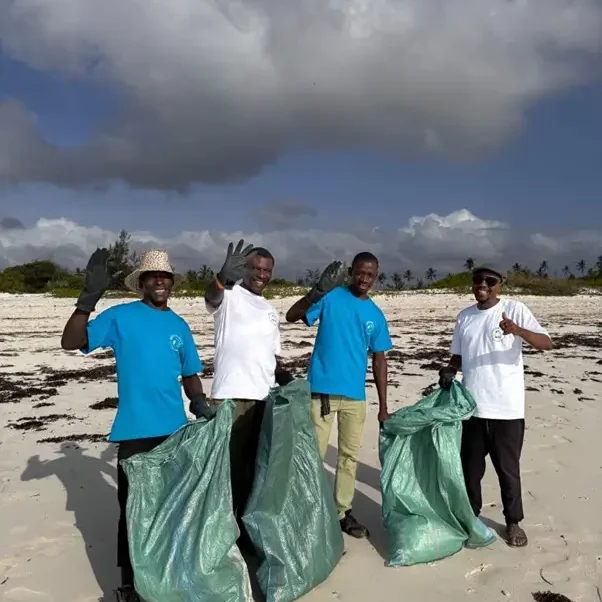
The Kwa Chambo fishers during their weekly beach cleans, Photo Credits: Siana Kilazzi Phillips – Ocean Sole, 2026.
A Fishery Under Strain
Along Kenya’s coastline, small-scale fishers are facing increasing competition from external fishing groups operating close to shore. Many of these use highly efficient and often destructive methods that leave little behind.
“There used to be so many fish, but now their numbers have reduced because of these people from neighbouring countries using ring nets on our near shore reefs,” says Anderson, a younger fisherman from Kwa Chambo.
“Ring nets collect all the fish, big and small and destroy the coral.”
For local fishers, the impacts are immediate. Daily catches have become less predictable, and the effort required to fish has increased. What was once a dependable livelihood is now uncertain.
But these changes are not only visible in fishing nets—they are also reflected beneath the surface.
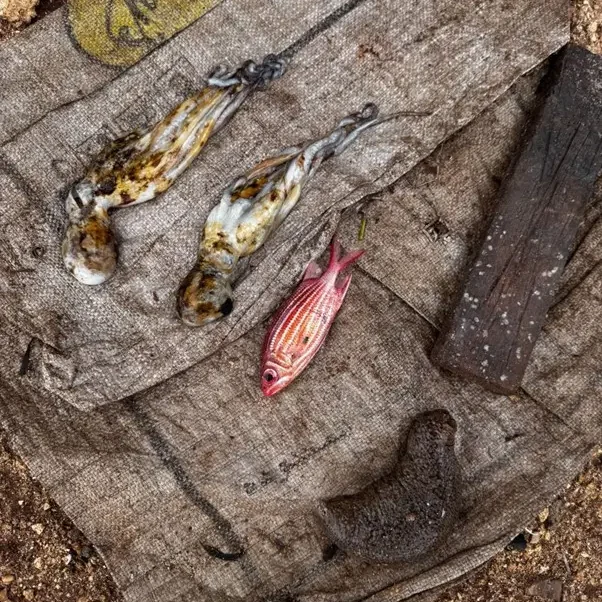
Typical daily catch for one of the Kwa Chambo fishermen, almost enough to feed a family but not enough to sell. Photo Credits: Siana Kilazzi Phillips – Ocean Sole, 2025.
Learning from the Reef
In response, the Kwa Chambo fishing community began working closely with Ocean Sole and scientists from the Kenya Marine and Fisheries Research Institute to better understand what is happening to their reefs.
Through a small, participatory reef survey, local fishers were trained to assess coral health, observe fish populations, and identify key species. For many, this was the first time engaging with their environment in this way—not just as fishers, but as observers and recorders.
What they documented reflected what they were already experiencing: fewer large fish, reduced numbers of important species, and coral habitats showing signs of stress.
But just as importantly, the process built something new—confidence.
Fishers began combining their deep local knowledge with scientific tools, strengthening their understanding of the reef and their role in its future.
This work has continued beyond the initial survey.
Community members are now collecting:
- Fish catch data, tracking changes in species and sizes over time
- Turtle nesting data, including egg counts and hatch success rates
These efforts are creating a locally owned evidence base—information that helps the community make decisions and engage more effectively with partners and authorities.
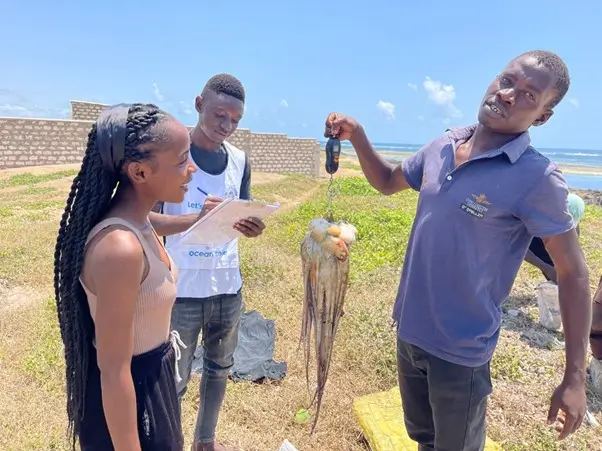
Ocean Sole team training the Kwa Chambo fishers to record their daily catch. Photo Credits: Thomas Sagimo – Ocean Sole, 2026.
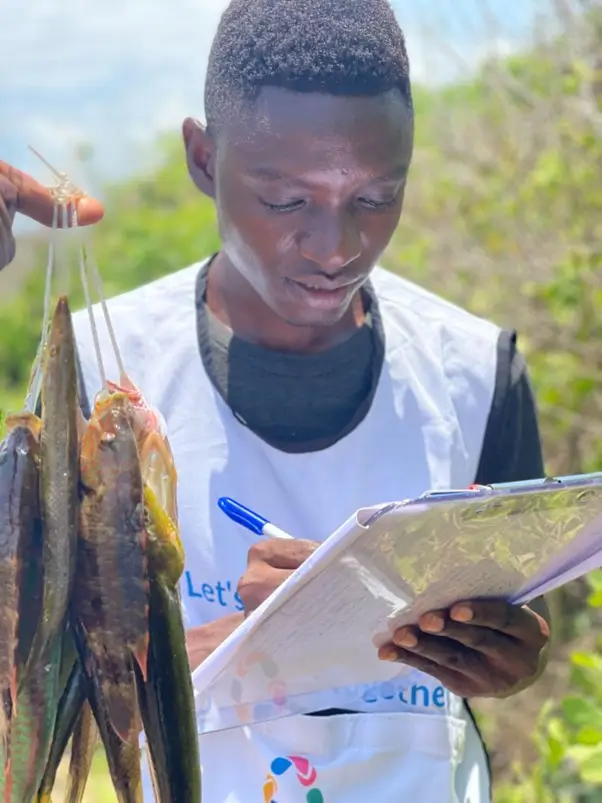
Karisa, one of the youngest Kwa Chambo Fishermen in charge of data collection. Thomas Sagimo – Ocean Sole, 2026.
Protecting What Remains
During the reef surveys, fishers identified several large coral formations that stood out from the surrounding reef.
These massive corals—old, resilient, and still alive—have survived years of environmental stress, including bleaching events and fishing pressure.
Their presence offered something important: proof that the reef still holds the capacity to recover.
Recognising this, the community began shifting its focus—not away from the ocean, but toward protecting what remains.
With support from Ocean Sole, fishers are now actively involved in monitoring reef areas and raising awareness about the importance of coral ecosystems. The aim is not only to reduce pressure, but to rebuild a sense of responsibility and pride in the marine environment
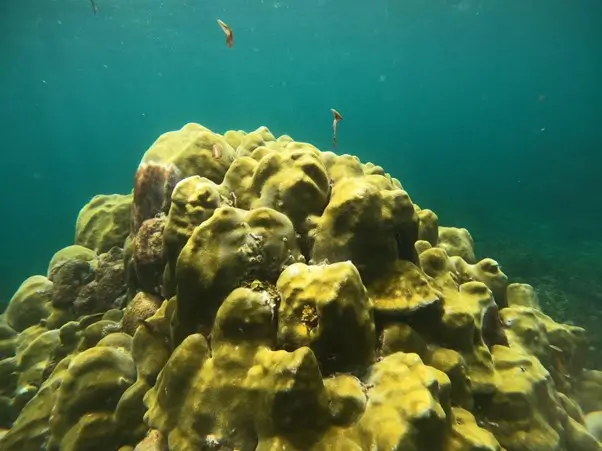
Large, healthy Porites Coral found opposite the Kwa Chambo landing site. One of many living corals in this area. Photo Credits: Siana Kilazzi Phillips – Ocean Sole, 2026.
From Fishing to Conservation Livelihoods
As fishing becomes more uncertain, Kwa Chambo fishers are also exploring new ways to earn a living—ones that are linked to protecting the ocean rather than extracting from it.
One of the most significant initiatives has been a community-led turtle protection programme.
Fishers now monitor nesting beaches, record the number of eggs laid, and track hatch success rates. This work contributes directly to conservation while also creating opportunities for engagement with visitors and researchers.
Alongside this, regular beach clean-ups have become part of community life, helping to reduce marine pollution and reinforce the connection between healthy coastlines and healthy reefs.
These activities are not separate from livelihoods—they are becoming part of them.
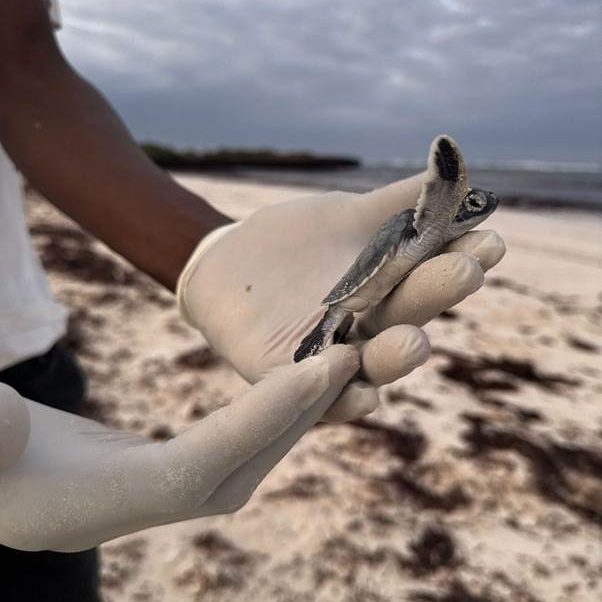
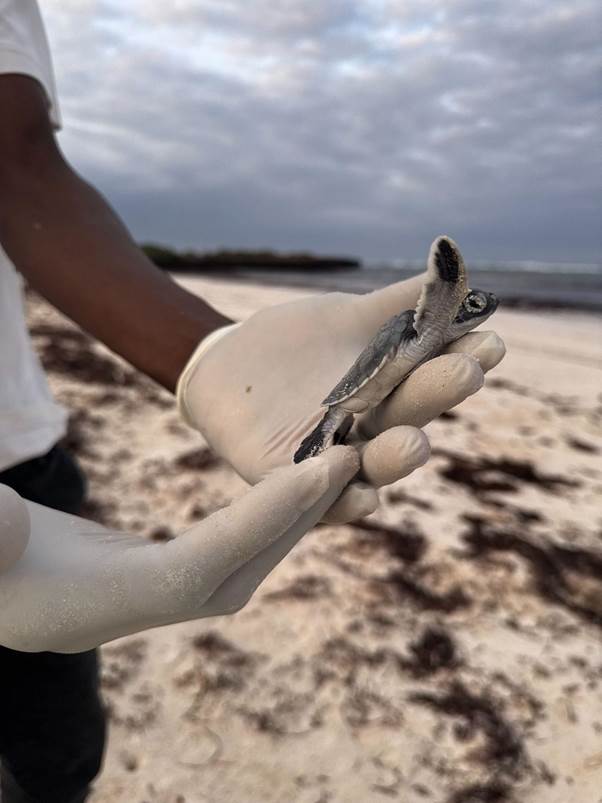
Baraka, a Kwa Chambo fisherman now trained Turtle Ranger gently holding a baby Green Turtle. Photo Credits: Siana Kilazzi Phillips – Ocean Sole, 2026.
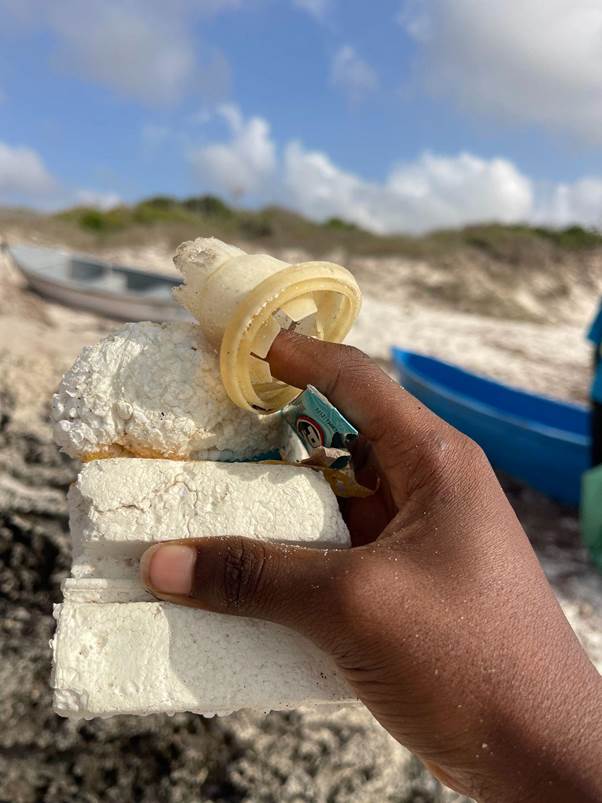
Kwa Chambo Fisherman holding some Ocean Waste collected during a routine beach clean. Rehema Mercy – Ocean Sole, 2026.
Sharing the Ocean Differently
Another important shift is taking place in how the reef is used.
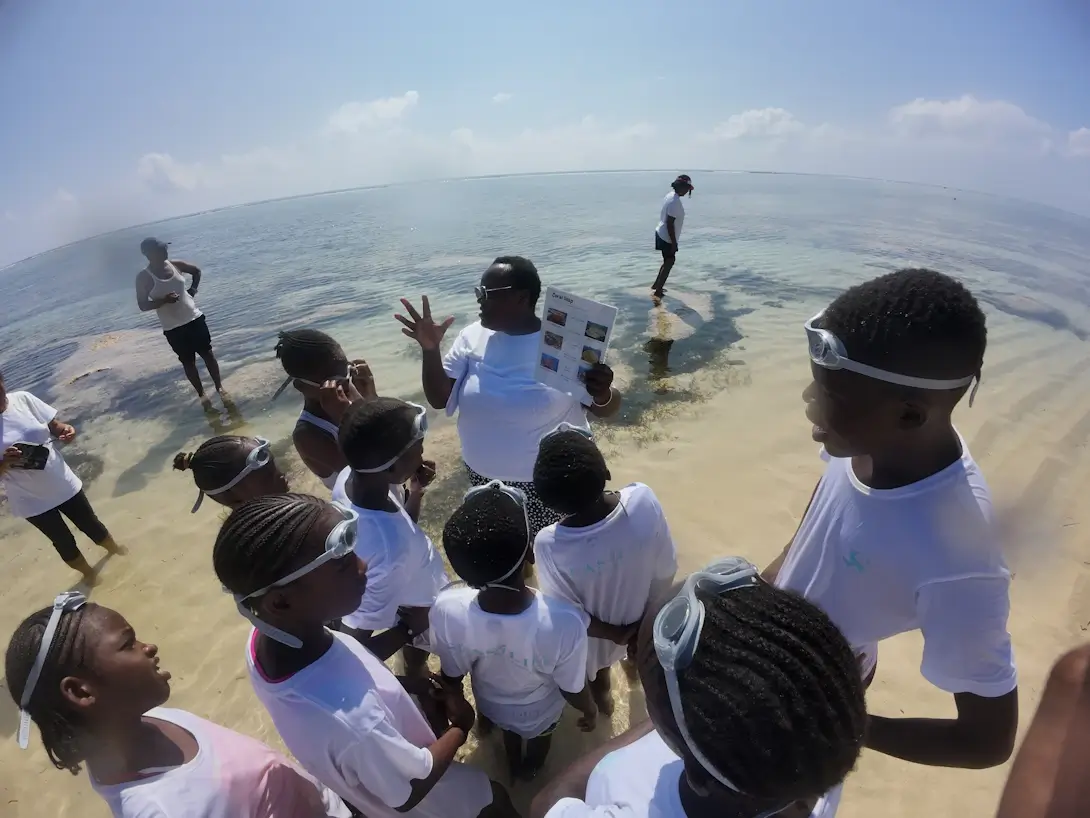
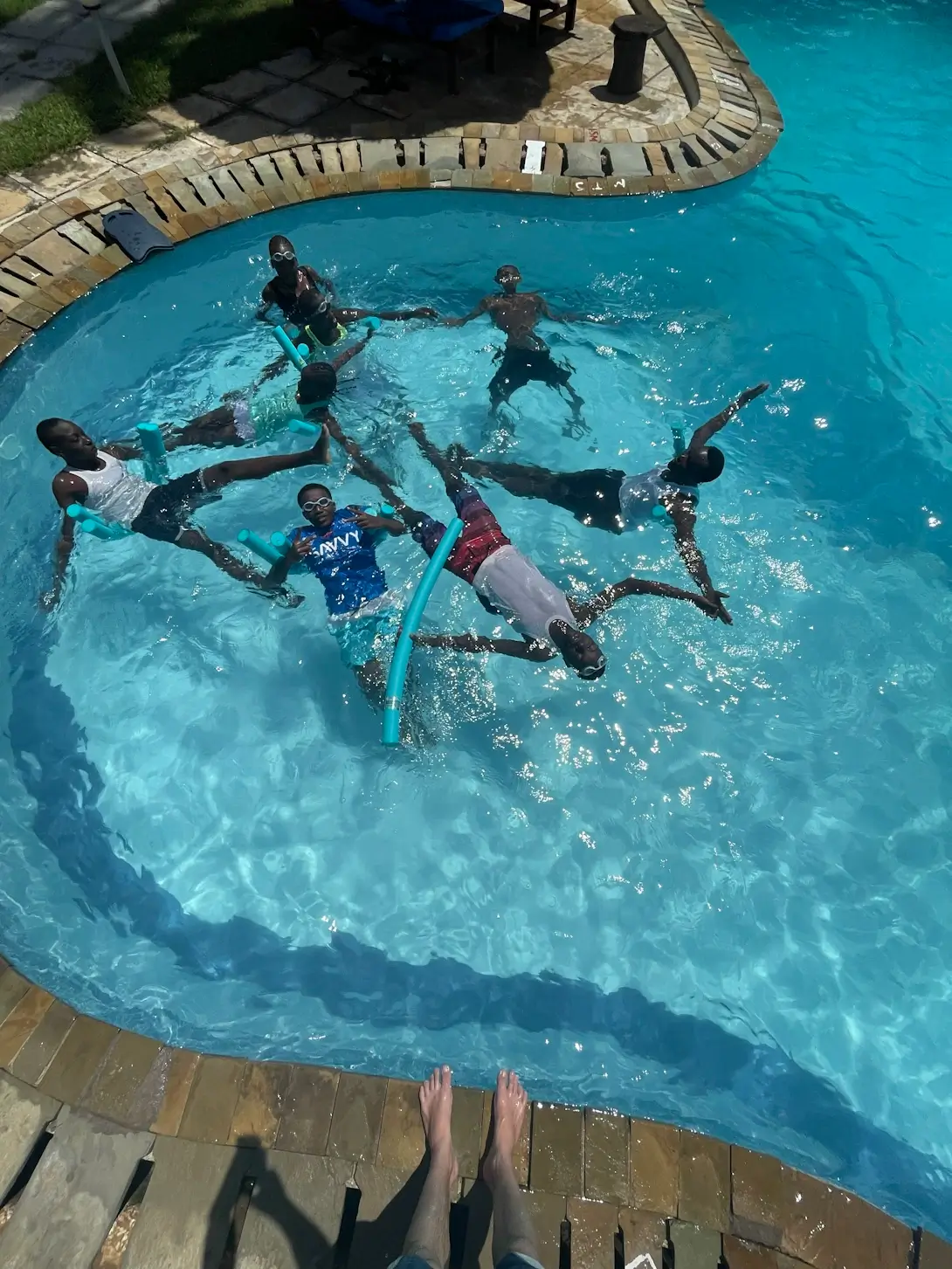
With training and support from Ocean Sole, some fishers have begun working as snorkelling guides, taking visitors out to explore the reef.
These are not typical tours.
Visitors are guided by people who know the ocean intimately—who can explain how it has changed, what species are important, and why certain areas need protection. Some of the tours include visits to the large coral formations identified during the surveys, offering a rare chance to see resilient reef structures up close.
This transition—from harvesting the reef to guiding others through it—represents a meaningful change.
It provides an alternative source of income while reducing pressure on already strained fish stocks. At the same time, it creates a direct link between conservation and economic opportunity.
Ongoing Challenges
Despite these efforts, significant challenges remain.
Destructive fishing practices, particularly the use of ring nets, continue to impact nearshore reefs. These methods not only reduce fish populations but also damage the coral structures that support them.
Climate change adds further pressure, with coral bleaching events already affecting reef health in recent years.
At the same time, eco-tourism activities are still small-scale and require further development to become a stable source of income.
Addressing these challenges will require continued collaboration, support, and investment.
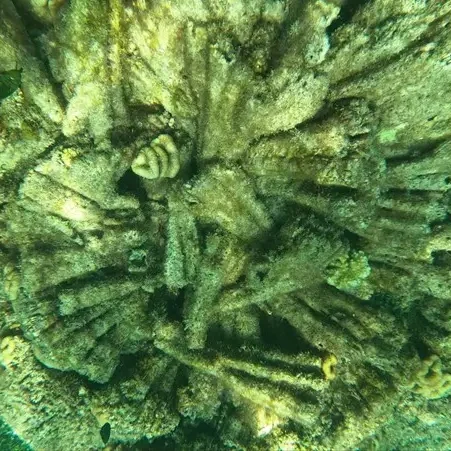
Damaged coral colony, likely impacted by an anchor, now overgrown with algae—an indicator of reef stress. Siana Kilazzi Phillips – Ocean Sole, 2026.
A Community Responding to Change
What stands out in Kwa Chambo is not only the challenges the community faces, but how it is responding.
Faced with declining fish stocks and environmental change, local fishers have:
- Engaged directly in reef monitoring and data collection
- Contributed to turtle conservation efforts
- Developed new skills in guiding and eco-tourism
- Strengthened their understanding of the marine environment
These actions are practical, locally driven, and rooted in everyday experience.
They show that even small, community-led efforts can begin to shift the trajectory of both livelihoods and ecosystems.
Looking Ahead
Back on the shore, the rhythm of life continues.
Fishers still enter the water each day—free diving along the reef, using hand-made traps and simple gear passed down through generations. These methods, though modest, have long allowed the ocean time to recover.
Fishing remains part of Kwa Chambo’s identity.
But it is no longer the only story.
The same fishers who once depended solely on what they could catch are now also protecting turtles, collecting data, guiding visitors, and monitoring their reefs.
The ocean is still under pressure—but it is also being watched, understood, and cared for in new ways.
And in that shift—from uncertainty to action—there is a quiet form of resilience taking shape along the shores of Kilifi.
Support the Kwa Chambo Community
Donations help fund turtle conservation, reef monitoring, and eco-tourism training led by local fishers.
Click here to donate: https://www.oceansole.org/take-action