Local Ocean Conservation
Off the coast of Kenya, where the Indian Ocean meets the coral reefs of Watamu Marine National Park, a small NGO and the fishing community it works alongside have spent nearly three decades quietly rewriting what conservation can look like.The Ocean Calls
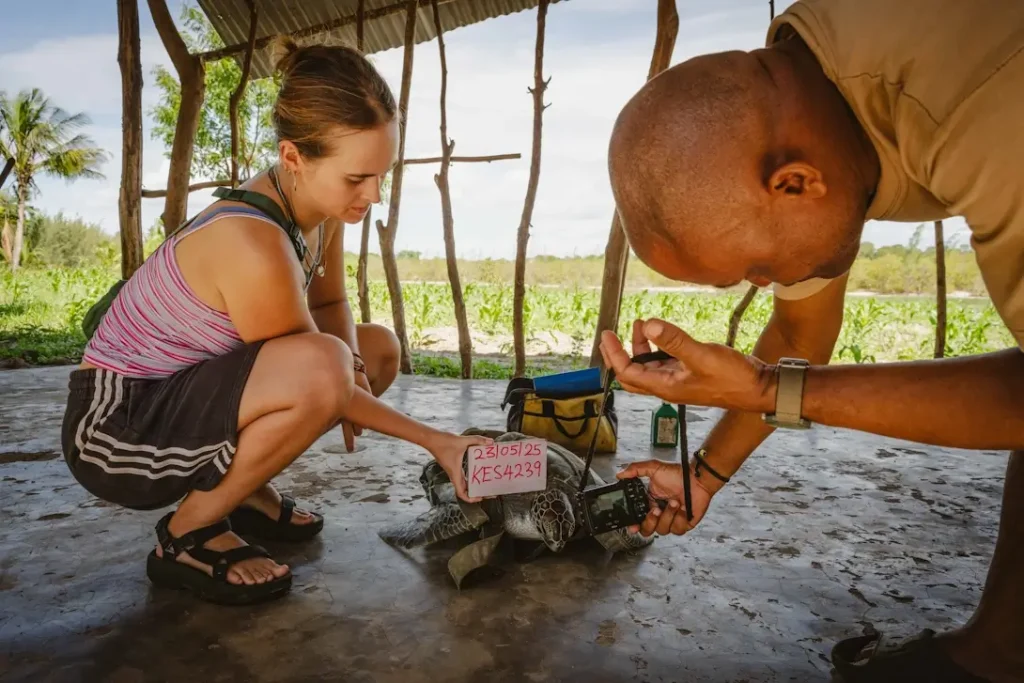
When a call comes into Local Ocean Conservation (LOC) reporting a turtle tangled in a net, Fikiri Kiponda is one of the first to respond. As Bycatch Rescue Coordinator and a member of the Watamu community himself, Fikiri has been at the centre of LOC’s rescue operation since 2009. He knows the coastline, the fishing grounds, and the fishers, and they know him.
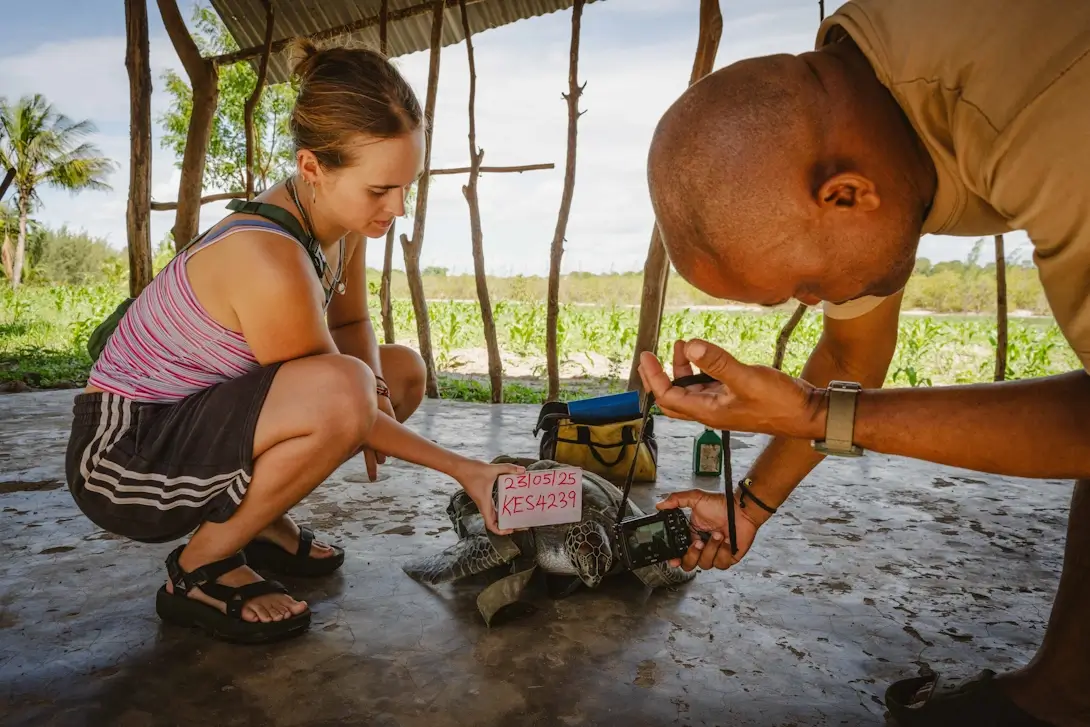
A turtle is tangled in a net. A loggerhead, exhausted and half-drowned, needs to be brought in quickly. The response has to be fast, coordinated, and informed by a deep understanding of local fishing patterns and the community around Watamu. That is Fikiri’s day to day work. Separately, LOC’s nest monitoring team, which Fikiri manages, moves along Watamu beach each night during the nesting season, recording every turtle emergence and protecting nests through to hatching. Together, these two programmes form the backbone of LOC’s sea turtle conservation effort.
Since LOC was established in Watamu in 1997, the organisation has recorded 1,040 sea turtle nests in Watamu and has admitted 24,785 turtles through its bycatch rescue programme, one of the longest-running records of its kind in the Western Indian Ocean. Behind those numbers is not large governing institutions. It is a community.
“The sea is our neighbour. If a turtle is in trouble, it is our responsibility. That is just how it is here.” Fikiri Kiponda, Bycatch Rescue Coordinator
From Bycatch to Rescue
Sea turtles face threats on multiple fronts across the Western Indian Ocean. Habitat loss, plastic pollution, climate-driven shifts in nesting conditions, and illegal poaching all take a toll. But bycatch, the accidental entanglement or capture of turtles in fishing gear, remains one of the most significant and immediate causes of injury and death for all five species found in this region.
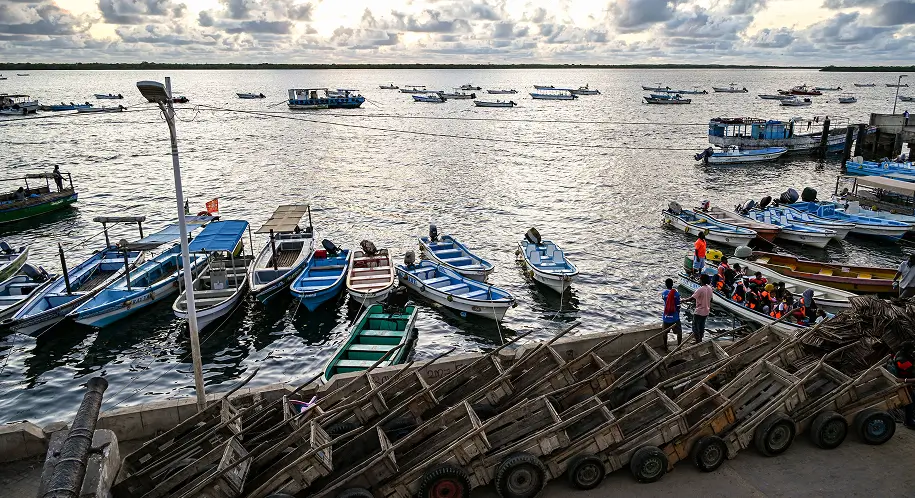
What makes LOC’s model distinctive is not simply that it rescues turtles. It is how that rescue system is structured. Rather than positioning conservation as something done to the fishing community, LOC has spent decades building a network of fisher-reporters: local fishers who contact the LOC team when a turtle is caught as bycatch, knowing that a trained response will follow quickly and that the animal has a real chance of survival.
That relationship took time. In the early years, there was scepticism. Fishers were concerned that conservation rules would restrict their livelihoods. LOC engaged not by imposing restrictions, but by listening, by demonstrating the value of the work, and by making clear that the organisation’s presence was in service of both the ecosystem and the community that depended on it. Fikiri, himself from Watamu, has been central to maintaining that trust across sixteen years.
“The fishers know us,” he explains. “When they call, they know we will come. And they call because they want to. That is the most important thing.”
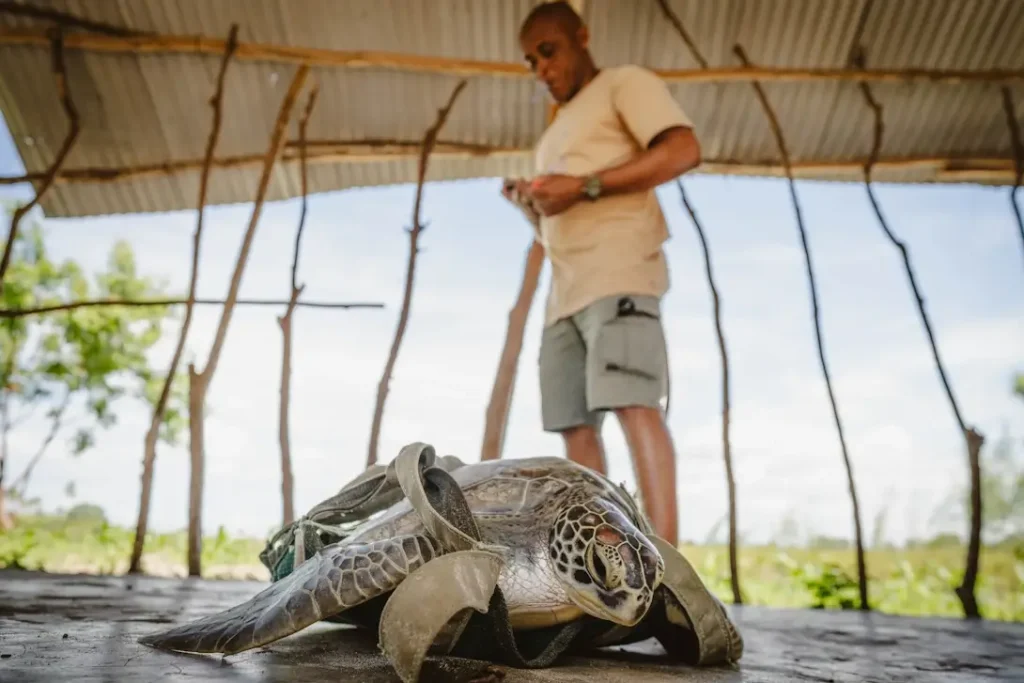
[IMAGE 1: Fikiri assesses a rescued green turtle before release. Credit: Frederick Lernyard]
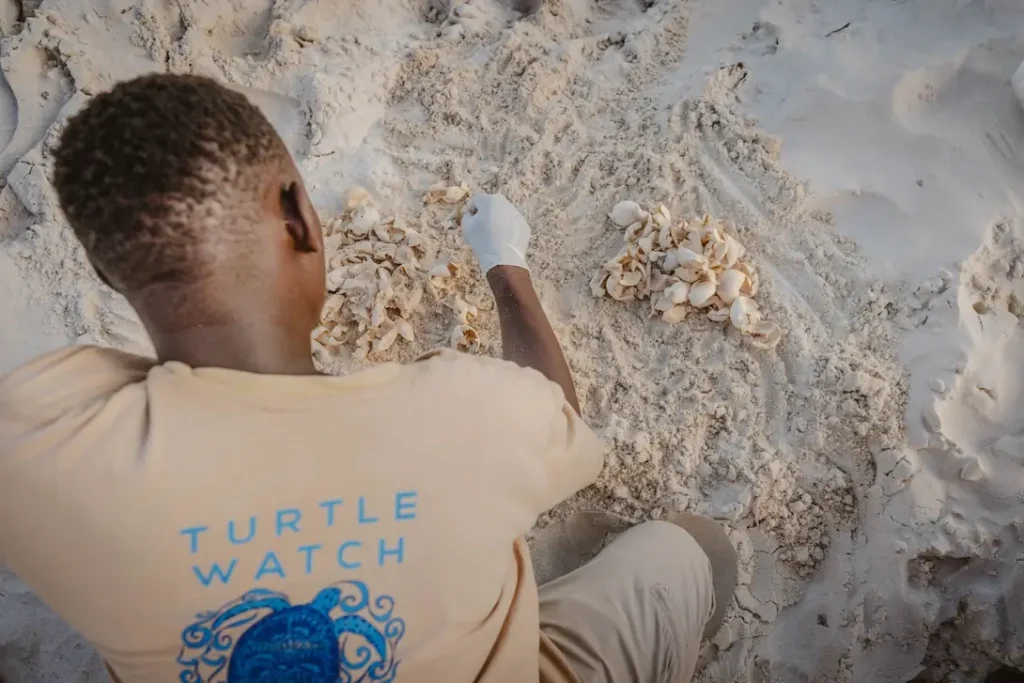
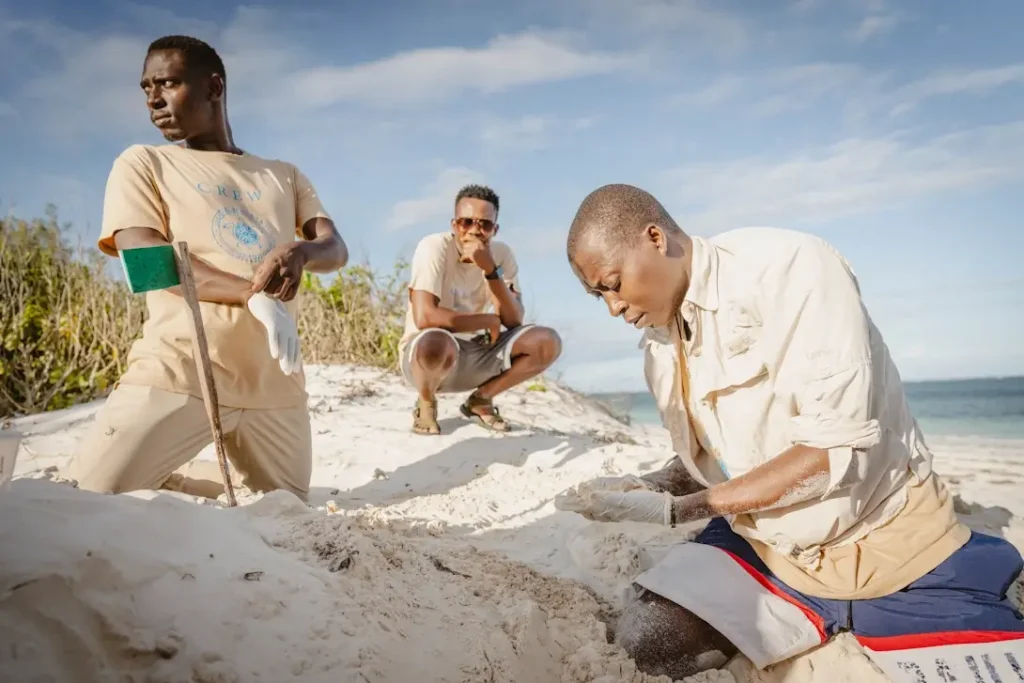
[IMAGE 2: LOC nest monitor on the beach at dawn, checking a recently hatched nest. Credit: Frederick Lernyard]
Reading the Beach
The nest monitoring programme runs nightly throughout the nesting season. Teams move quietly along Watamu beach, recording every emergence, whether a turtle nests successfully, false-crawls, or is disturbed. Every nest is logged and monitored through to hatching. Data collected over more than two decades forms one of the most comprehensive long-term records of sea turtle nesting in East Africa.
That data is beginning to tell a story that goes beyond individual animals. Shifts in nesting timing, changes in nest site selection, and variation in hatching success rates all offer early signals of broader environmental change, rising sand temperatures, altered rainfall patterns, the downstream effects of a warming Indian Ocean. LOC’s long-term nest records are now informing international research into how climate change is affecting sea turtle reproduction across the Western Indian Ocean.
The five species recorded in the park and reserve: Green, Hawksbill, Loggerhead, Olive Ridley, and Leatherback (although rarely), face different pressures and respond differently to environmental change. Monitoring all five, consistently, over years and decades, provides a picture of ecosystem health that no single survey or research expedition can replicate.
[IMAGE 3: A green turtle nest being recorded and tagged during the a rescue. Credit: Frederick Lerynard]
[IMAGE 4: Nest monitors perform a nest relocation to ensure high hatchling survival rates. Credit: Frederick Lernyard]
The Rehabilitation Centre: Where the Rescue Continues
Not every rescued turtle is released immediately. Turtles brought in with serious injuries, propeller strikes, deep entanglement wounds, ingested plastic, or advanced fibropapillomatosis, are admitted to LOC’s on-site rehabilitation centre for assessment and treatment under veterinary supervision. Some recover in days. Others require years of care before they are strong enough to return to the ocean.
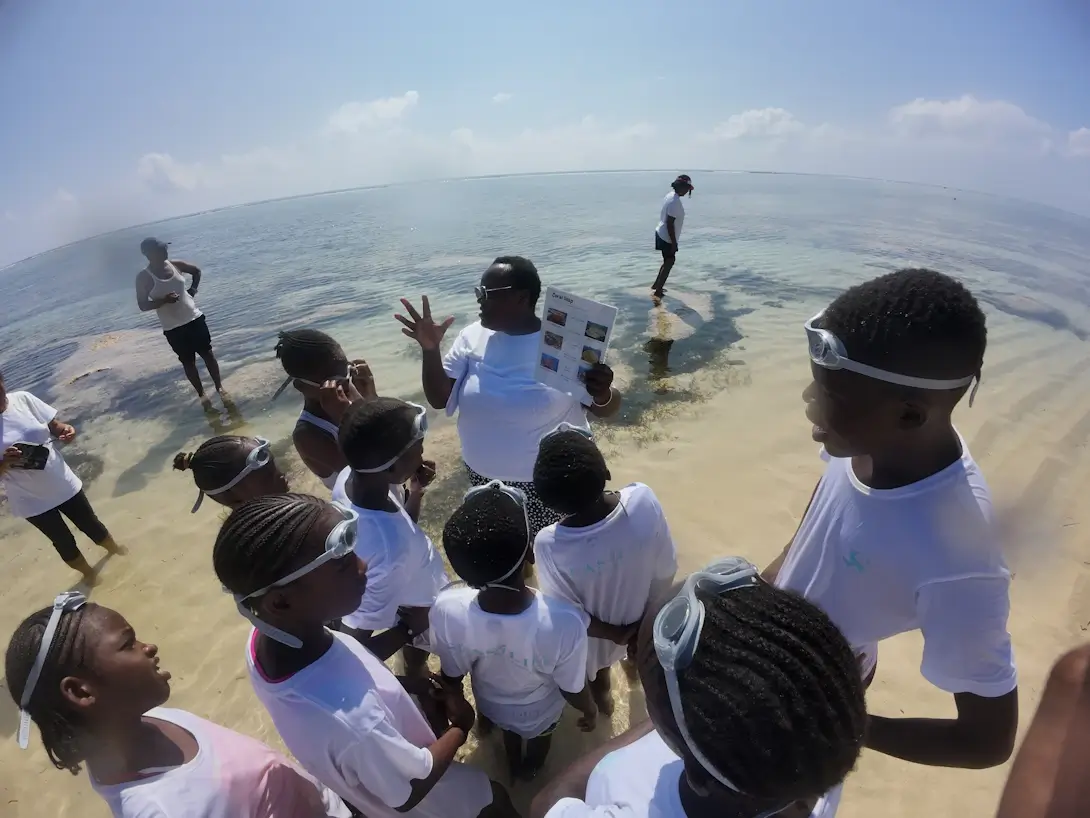
The rehabilitation centre also serves as a hub for community education. Schoolchildren from across the Watamu area visit regularly, many of them from fishing families. For them, seeing a turtle in recovery, learning what happened to it and why, and watching it eventually released makes the abstract idea of conservation something immediate and personal.
“When a child from a fishing family sees a turtle being released back into the sea,” says Fikiri, “they do not forget it. That is the work that will last.”
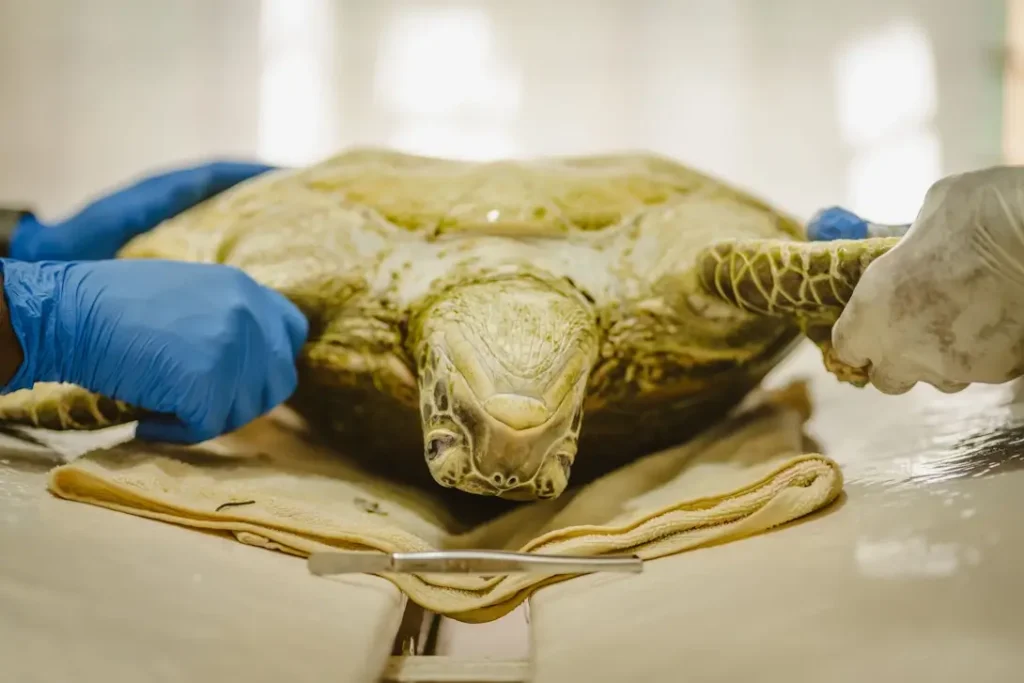
[IMAGE 5: A turtle undergoing rehabilitation at LOC’s centre following bycatch injury. Credit: Frederick Lernyard]
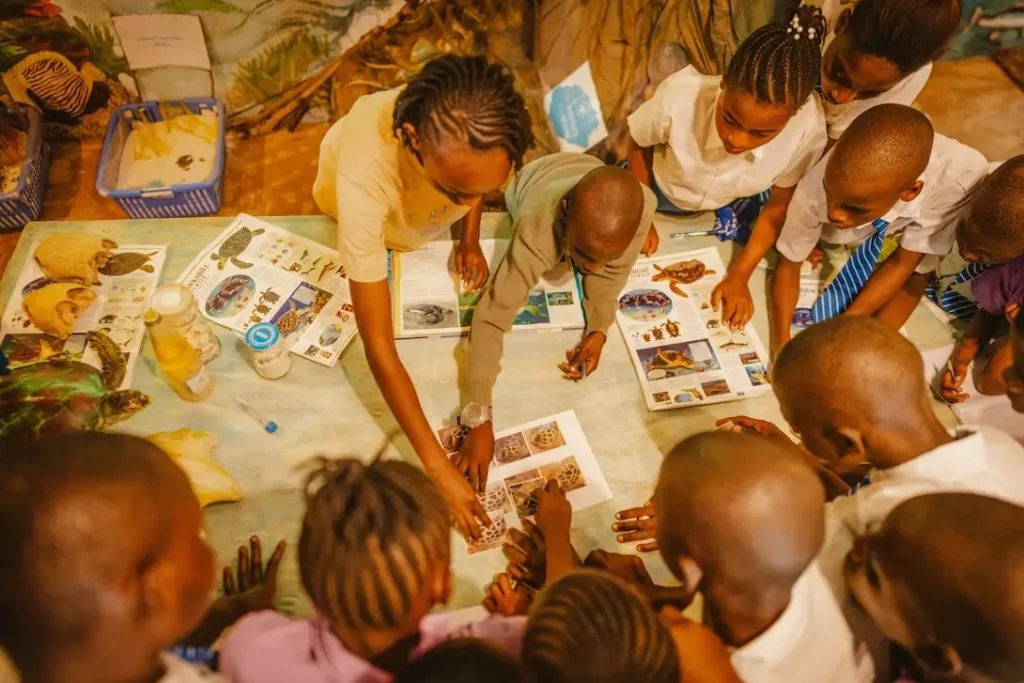
[IMAGE 6: Schoolchildren from Watamu visiting the rehabilitation centre as part of LOC’s marine education programme. Credit: Frederick Lernyard]
Conservation in the Context of the Ocean Conference
As world leaders, scientists, and policymakers gather for the Our Ocean Conference in June 2026, the conversations in those rooms will inevitably return to the question of what ocean protection actually requires. Marine protected areas are essential. International governance frameworks matter. Scientific monitoring is irreplaceable.
But the story of Watamu offers a reminder that none of those systems function without the people who live closest to the ocean, the fishers who make the call when they find a turtle in their net, the monitors who walk the beach in the dark, the community members who have chosen, again and again across nearly thirty years, to be part of something larger than immediate self-interest.
LOC operates within Watamu Marine National Park and Reserve, one of Kenya’s oldest and most biodiverse marine protected areas. The park’s protection gives the work a legal framework. But it is the community’s participation that gives it life. The 24,785 turtles rescued since 1997 are not a statistic generated by a conservation institution. They are the cumulative result of thousands of individual decisions by individual people, fishers, monitors, community members, to act.
24,785 sea turtle rescues since 1997. 1,040 nests recorded on Watamu beach. Nearly three decades of nightly data. None of it possible without community.
What the Western Indian Ocean Needs
Sea turtles are a flagship species in every sense: charismatic, wide-ranging, and deeply connected to the health of the ecosystems they inhabit. Their nesting beaches, feeding grounds, and migratory corridors span international boundaries. The threats they face, bycatch, pollution, habitat degradation, climate change, are shared across the Western Indian Ocean region.
Addressing those threats at the scale required means supporting and resourcing the community-based networks that are already doing the work. It means investing in long-term monitoring programmes that can detect ecological change before it becomes crisis. It means ensuring that the fishers who call in a bycatch report, and the monitors who walk the beach every night, are recognised as essential contributors to regional ocean health and supported accordingly.
For Fikiri Kiponda, the work is not complicated in its purpose, even when it is demanding in its execution. “I do this because I love the turtles,” he says simply. “And because Watamu is my home. You protect what you love.”
In the coming nesting season, as turtles return once again to the shores of Watamu Marine National Park, that simple commitment will play out across thousands of quiet hours on the beach. The science will accumulate. The data will deepen. And the community will keep watch, as it has for nearly thirty years.
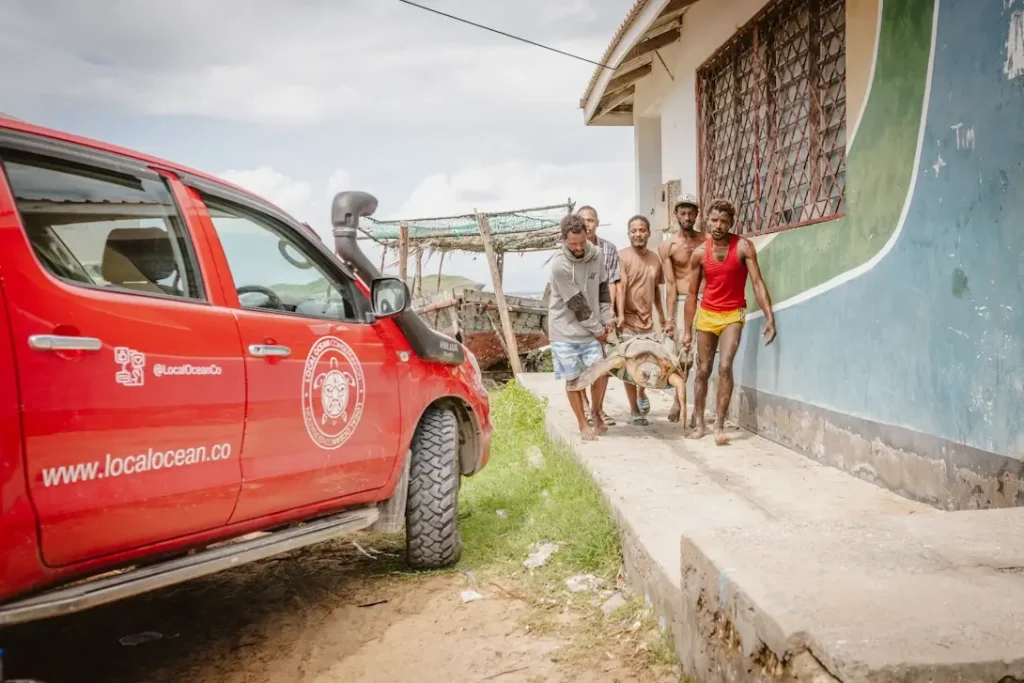
[IMAGE 7: The LOC bycatch rescue team respond to a call from Fisher Community Credit: Frederick Lernyard]
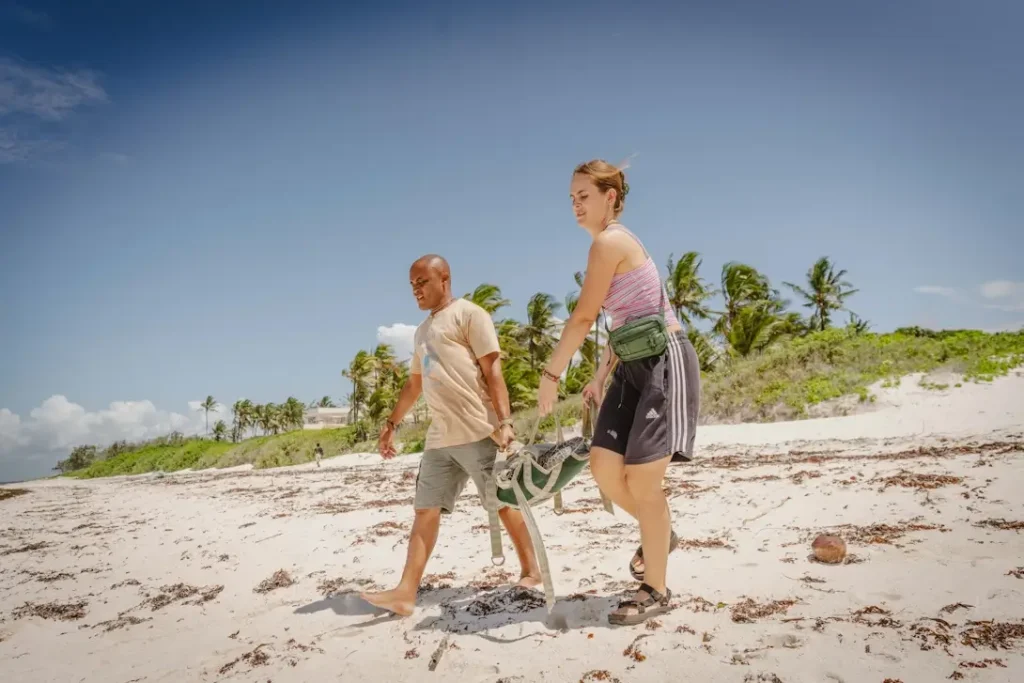
[IMAGE 8: A rehabilitated sea turtle being released on Watamu beach. Credit: Frederick Lernyard]
ABOUT LOCAL OCEAN CONSERVATION
Local Ocean Conservation (LOC) is a marine conservation NGO based in Watamu, Kenya, working within Watamu Marine National Park and Reserve since 1997. LOC’s programmes span sea turtle rescue, rehabilitation, and nest monitoring; community and marine education; anti-poaching; and coastal ecosystem work including mangrove monitoring and beach clean-ups. For more information, visit localocean.co